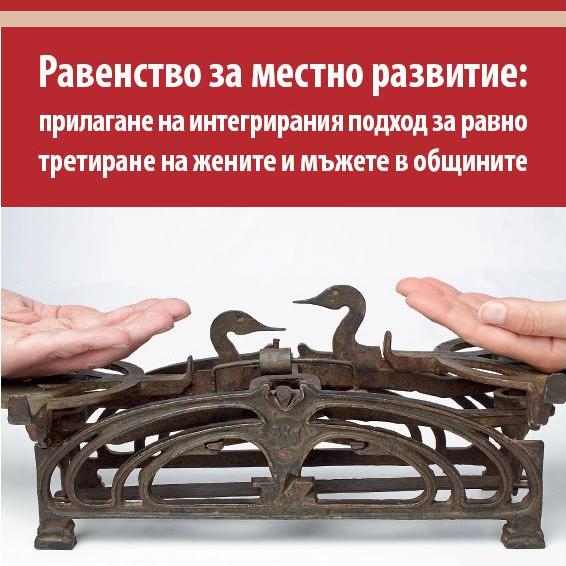
| Project “Equality for local development: gender mainstreaming in municipalities” |
|
|
 |
About the project
In 2007 three Bulgarian municipalities made the first steps in the implementation of gender mainstreaming at local level in Bulgaria. The Municipalities of Sofia, Veliko Turnovo and Plovdiv as partners of the Center of Women's Studies and Policies took part in the international project "Equality for Local Development: Gender Mainstreaming in Municipalities" (2006-2007). The promoter of the project, implemented from October 2006 to December 2007, is the the Office of the Equal Opportunities Ombudsperson in Lithuania. More about the partners. The project is directly related to the gender dimension of Lisbon strategy for jobs and growth, and Commission's commitment to strengthen gender equality. It will provide broader knowledge on European and national policy on gender equality, improve competences on implementation of gender mainstreaming and gender budgeting methodologies and enhance the promotion of gender equality at local level. The project aims at fostering sustainable change in local communities by encouraging balanced participation of women and men in social and economic development of their community and increasing analytical and practical capacities of local authorities to implement real gender equality policies. Its activities include:  | The project entitled "Equality for Local Development: Gender Mainstreaming in Municipalities" (2006-2007) is financed and implemented within the Community Programme relating to the Community Framework Strategy in Gender Equality (2001-2005). Sole responsibility for the contents of this publication lies with the authors, the Commission is not responsible for any use that may be made of the information contained there. |
The project is supported in part by a grant from Foundation Open Society Institute (Zug).
|
|
Partners
Project Coordinator Office of the Equal Opportunities Ombudsperson (Lithuania): http://www.lygybe.lt/ The Office of the Equal Opportunities Ombudsperson monitors the implementation of the Law on Equal Opportunities of Women and Men (1999) and the Law on Equal Treatment (2005) which outlaw direct and indirect discrimination on grounds of sex, age, sexual orientation, disability, race and ethnic origin, religion or beliefs. The Ombudsperson may investigate complaints relating to discrimination in work, public service, educational, academic and science institutions, goods and services provision, discriminating advertisments and sexual harassment cases. It also engages in a number of activities promoting equality and diversity. Project Partners Gender Equality Commissioner (Estonia): http://www.svv.ee/ The Gender Equality Commissioner is an independent and impartial expert who acts independently, monitors compliance with the requirements of Gender Equality Act and performs other functions imposed by law. The Gender Equality Commissioner accepts applications from persons and provides opinions concerning possible cases of discrimination,; analyses the effect of legislative acts on the situation of men and women in society,; makes proposals to the Government, and local governments and their agencies for amendments to legislation,; advises and informs state institutions on issues relating to the implementation of Gender Equality Act and takes measures to promote gender equality. Ministry of Social Security and Labour (Lithuania): http://www.socmin.lt/ The Ministry is responsible for dealing with issues regarding anti-discrimination within the field of social policy field which are in its competence. The activities of a newly formed Department of Equal Opportunities and Social Integration include the issues of the disabled, social risk groups, social integration of foreigners with a residence permit, and coordination of equal opportunities of women and men in all fields of activity in the implementation of specific gender measures within the competence of the ministry. Centre for Equality Advancement (Lithuania): http://www.gap.lt/ The activities of the Center for Equality Advancement (CEA), founded in July 2003 are a continuation of the Open Society Fund-Lithuania Women's programme implemented during 1997-2002. The center is expanding its scope in an attempt to unite the activities of governmental and nongovernmental organizations working in the field of gender equality in Lithuania. The main goal of the CEA is to promote the consolidation of equal rights for women and men and their implementation, and to strengthen democracy in the country through measures that facilitate equal representation of women and men's interests in decision-making processes. Municipality of Siauliai (Lithuania): http://www.siauliai.lt/ Since 2003 this local authority has participated in several projects promoting gender equality on a local level ("Improved democracy through gender-balanced desicion making process in local administrations in Lithuania") and has already built up a large body of expertise on equal opportunities in local policy-making and activities. Centre of Women‘s Studies and Policies (Bulgaria): http://www.cwsp.bg/ The activities of the CWSP are focused on monitoring gender equality and the status of women, promoting women's human rights, and encouraging the participation of women in political, social and economic life and regional cooperation. Since its establishment in 2003 the organization has been providing technical assistance and consultancy to women's NGOs in Bulgaria as well as to public administration at all levels for raising its capacity in gender mainstreaming and gender equality policy development. Since 2006 CWSP represents over 20 NGOs and networks across Bulgaria, and in the National Council on Equality between Women and Men to the Government of Bulgaria. The CWSP provides training on gender equality issues for different target groups (youth, trade unions, local authorities, political parties, etc.) and maintains the richest web based gender resource center in Bulgaria: http://www.cwsp.bg/. Local Authorities Involved in the Project In Lithuania: In Estonia: In Bulgaria: Trainers and Facilitators Fredrik Lundkvist, expert in the 3R method Catharina Schmitz, expert in Business Management, Financial Management and Gender Budgeting, Managing Director, Institute of Public Management, Stockholm, Chris Ormalm, local development expert Tatyana Kmetova, Roza Dimova, Magdanela Delinesheva, gender experts, Center of Women's Studies and Policies
| | The project entitled "Equality for Local Development: Gender Mainstreaming in Municipalities" (2006-2007) is financed and implemented within the Community Programme relating to the Community Framework Strategy in Gender Equality (2001-2005). Sole responsibility for the contents of this publication lies with the authors, the Commission is not responsible for any use that may be made of the information contained there. |
The project is supported in part by a grant from Foundation Open Society Institute (Zug).
|
|
Training
The main project activities are focused on raising the gender awareness and the capacity of municipalities to mainstream gender in their work by using the 3R method and gender budgeting. In Bulgaria, like in the other two partner countries, were trained municipal servants and councillors, who attended a series of 4 seminars, intended to introduce the gender equality policy in public life as well as to develop practical skills for applying the instruments of gender mainstreaming in the work of the municipality. Seminar 1: Veliko Turnovo, 30 March - 1 April 2007
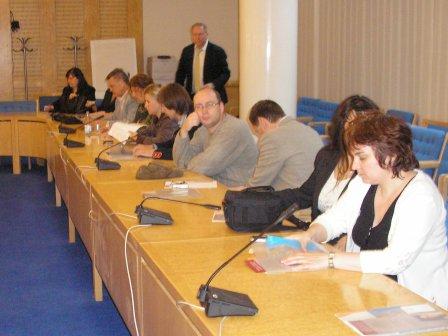
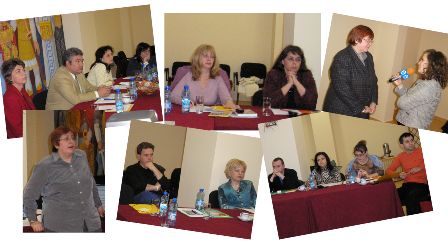 The training program included main concepts, related to gender equality (sex and gender, gender roles, stereotypes), the legal framework for equal treatment and non-discrimination in Bulgaria and EU, UN instruments; the institutional mechanism for gender equality as well as the main methods of gender mainstreaming. Another focus of the training fell on the gender aspects of the European policy for local development. During the training were discussed several main documents that represent the commitments of organizations of local authorities to gender equality - the European charter for equality of women and men in local life of the Council of European Municipalities and Regions (2006), which builds upon the Worldwide Declaration on "women in local government" (1998) of the International Union of Local Authorities; the Declaration on the fight against trafficking in human beings of the Congress of Local and Regional Authorities to the Council of Europe (2006), as well as examples for good practices - Swedish, Scottish, Canadian. It was emphasised that the National Association of Municipalities in the Republic of Bulgaria has established a Committee of women in local governance, which works for raising the awareness on gender issues and improving the representation of women in local governments. The first seminar was attended by 16 participants - 11 women and 5 men. Furthermore, a special training was organised for the councillors of Sofia Municipal Council with the same program in order to prepare them for the next seminars. The seminar took place on the 5 of April and was attended by 4 councillors - 3 women and 1 man. Seminar 2: Sofia, 20-21 April 2007
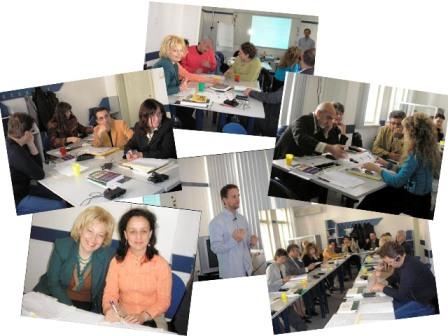 The focus of the second seminar fell on the 3R method which was presented by the lecturer Fredrik Lundkvist, a gender expert from Sweden with extensive experience for the Swedish Association of Municipalities and Regions. It was attended by 17 participants of which 8 men. What is the 3R method? The 3R method was developed in Sweden to serve the purpose of gender mainstreaming, and which is used to make surveys of the situation of women and men in different spheres of life. It presents a possibility for examining whether municipal practices have in-built discriminatory practices. In this method, a quantitative investigation of the first two Rs, representation and resources, forms the basis of the third R, realia, which is more of a qualitative component. With the aid of a simple survey and analysis, it is possible to generate concrete local discussions on equality, based on the work actually being done. The logic behind the 3R method is that very often we make decisions or initiate activities that help to maintain inequality between women and men. This may be because our notions of women and men include stereotypes or are obsolete, or because we regard the administrative or political areas as gender neutral. This method has already been used in Nordic municipalities and has proven to be very efficient. It is also easily applicable in other countries due to its relative simplicity. The seminar gave knowledge and created practical skills in using the 3R method by helping the participants to select topics for their local 3R surveys and guiding their on-going work. The seminar further enhanced the gender sensitivity of the participants and their motivation to work on gender equality issues and helped the participants find rational arguments for mainstreaming gender in their work. |
The seminar presented the experience of Swedish municipalities in the field of gender equality. It gave knowledge and created practical skills in using the 3R method by helping the participants to select topics for their local 3R investigations and guiding their on-going work. The seminar further enhanced the gender sensitivity of the participants and their motivation to work on gender equality issues and helped the participants find rational arguments for mainstreaming gender in their work. More about good practices in the 3R method from Sweden:  VERKSTAN_eng_.pdf (739.33 Kb) VERKSTAN_eng_.pdf (739.33 Kb) With the help of the lecturer and the facilitators from the CWSP during the working sessions, the participants were divided in three major groups based on their choice of problems to investigate through their 3R surveys: the access to municipal/school sports facilities for women and men and girls and boys; the attitudes of male students (in foreign languages, pedagogy, psychology, social sciences, music and arts) to work with young children and their willingness to be interns at kindergartens; the attitudes of the citizens towards the acts of vandalism against the monuments of culture that may result in restricting the access to public spaces for women.
The participants were encouraged to keep in touch with the Center of Women's Studies and Policies and the expert Fredrick Lundkvist for further consultations on their surveys. More information on the results of the final surveys. Seminar 3: Sofia, 28-29 May 2007
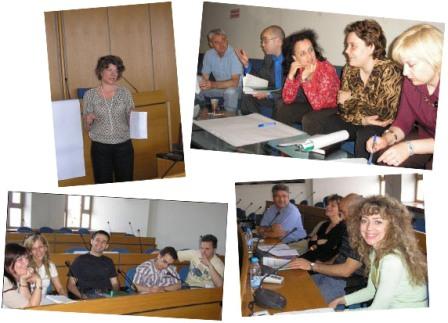
The third seminar was dedicated to gender budgeting - concept, principles, aims and tools for gender budget analysis, as well as to the experience of Sweden and other Nordic countries in gender budgeting at national and municipal level. The lecturer Catharina Schmitz is Managing Director of the Institute of Public Management in Stockholm, and has provided consultancy for over ten years on gender and good governance and gender budgeting. She is currently working with integration of a gender perspective in the budgetary processes in the Nordic Countries for the Nordic Council of Ministers. Special emphasis was put on the arguments for integrating the gender equality perspective into the budgetary process. The participants were also involved in practical assignments in order to launch discussion and develop their skills. The seminar was attended by 17 people of which 8 men. Seminar 4: Plovdiv, 8 - 10 July 2007 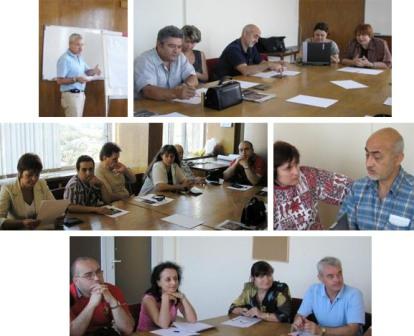 The aim of the last seminar was to finalize the results of the 3R surveys conducted by the participants during the process of training. The participants presented their results and analyses. It was also discussed if any further data is needed to finalize the surveys or enhance them. The seminar was attended by 18 participants of which 8 men. More about the surveys: Media coverage The seminars in Veliko Turnovo, Sofia and Plovdiv were largely covered by local and national media. Before each event a press release was sent to the media in order to inform the public. During the first and the last seminars were organized press conferences as well as interviews for the local media. On the whole, all seminars and the project were well-reflected by the national media - daily newspaper „24 hours", the Bulgarian News Agency, the Information Agencies Focus and Actualno, Darik Radio, Military TV Channel, and a number of local media - three daily newspapers, five cable TV channels, two Municipal Cable Radios. During the last seminar in Plovdiv a major event of the National Association of Municipalities in the Republic of Bulgaria was held at the same time and this opportunity was used to spread information about the project among the participants in the National Meeting of Local Authorities, which was done with the kind cooperation of the Association. | | The project entitled "Equality for Local Development: Gender Mainstreaming in Municipalities" (2006-2007) is financed and implemented within the Community Programme relating to the Community Framework Strategy in Gender Equality (2001-2005). Sole responsibility for the contents of this publication lies with the authors, the Commission is not responsible for any use that may be made of the information contained there. |
The project is supported in part by a grant from Foundation Open Society Institute (Zug).
|
|
3R Surveys
The seminars introduced the participants with the 3R method and created their skills to apply it successfully in their own work by identifying the existing gender related problems, gathering adequate gender disaggregated data, analysing the patterns of allocation of resources and participation in local governance by gender as well as preparing action plans to eliminate the inequalities. In Bulgaria were conducted seven micro-surveys from gender perspective in diverse areas like sport and education, teaching in kindergartens, services to senior citizens and people with disabilities, public safety and improvement of tourist services and analysis of project proposals. The surveys were aimed mainly at identifying if men and women, boys and girls have equal access and equal opportunities to use the municipal resources as well as what the existing or potential risks, obstacles and threats are. Below are presented the Executive Summaries of the surveys conducted by using the 3R methodology. All Executive Summaries: 3R_summaries_EN.pdf (407.12 Kb) | Title: | Equal access and equal opportunities for men and women to the municipal clubs for pensioners and people with disabilities in Sofia | | Executive Summary: | 3R_clubs_EN.pdf (111.18 Kb) | | Abstract: | There are nine municipal clubs for pensioners and people with disabilities in Sofia, used by members of the respective associations to the clubs or with individual permits for attendance. The main goal of the clubs' activities is to provide opportunities for social contacts. The activities are organized by the associations to the respective clubs and basically include board games like chess, backgammon, cards, as well as lectures, excursions, concerts and trips. However, in practice, the men and women who actually attend the activities are less than the members of the associations to the clubs. Moreover, there is a clear gender division in the choice of activities which separates men and women into large groups with different interests. The objective of the survey is to find out if men and women have equal access and equal opportunities to use the municipal clubs for pensioners and people with disabilities, based in Sofia and to participate in their preferred activities. | | Team: | Margarita Peeva, Chief Expert in the Social Activities Directorate, Sofia Municipality, Phone. +359 2/ 822 61 44, e-mail: mpeeva@sofia.bg |
| Title: | School sports facilities - suitable for girls and boys | | Executive Summary: | 3R_sport_EN.pdf (111.31 Kb) | | Abstract: | The identified problem is the low participation of pupils in both curricula and extra-curricula sports activities practiced in the school sports facilities, which has negative effects on their health and physical development. Usually the reasons are seen in the unsatisfactory conditions of the sports facilities. But why it has more negative impact on girls compared to boys? The survey analyses data for one representative school in Sofia and focused on the use of school sports facilities by the pupils from different age group by gender and the general conditions of the sports facilities. The objecives of the survey are to determine the main trends regarding the participation of pupils in sports activities from a gender perspective and make recommendations. | | Team: | Directorate of Sports and Prevention of Dependencies, Sofia Municipality: Irena Dimitrova, Director, Pavel Ivanov, Chief Expert, Chavdar Velinov, Senior Expert. Contacts: phone: +359 2/9810649, e-mail: bowlingfest@abv.bg |
| Title: | Attitudes of male and female students to internships in the kindergartens | | Executive Summary: | 3R_kindergartens_EN.pdf (124.39 Kb) | | Abstract: | Kindergartens provide children only with female behavior and role models. Stereotypes about male and female professions contribute to the nearly 100% female teaching staff. Due to the low pay and public image of the profession, it is not attractive for young graduates in pedagogy with more diverse qualifications, like foreign languages and arts or graduates in psychology and as a result they rarely specialize in this area. There is a big demand on the part of the parents for additional classes in music, arts and English language in public kindergartens. For answering the demand the kindergartens ensure external teachers in foreign languages and arts. These services are additionally paid by the parents. All graduates in pedagogical specialties in their final year of study have compulsory practical internships. The 3 parallel surveys were conducted to explore the attitudes of male and female students to work with the age group of 3-5 years - two in Sofia and one in Plovdiv - among students in different specialties in four universities. They aimed at identifying the attitudes of male and female students to: (i) work with children between 3-5 years; (ii) do their internship in kindergartens instead of/and in schools; and (iii) choose a topic of their diploma paper, related to this age group. | | Team: | (1) Diana Vaneva, Chief Expert in International Cooperation and European Integration Directorate, Municipality of Plovdiv, contacts: tel.: 032/ 656527, e-mail: euro@plovdiv.bg; (2) Margarita Peeva, Chief Expert in Social Activities Directorate, Municipality of Sofia, tel.: 02/822 6144, e-mail: mpeeva@sofia.bg, Dobroslav Iliev, Junior Expert in Social Activities Directorate, Municipality of Sofia, tel: 02/9875367, e-mail: diliev@sofia.bg; (3) Gueorgui Stoimenov, Municipal Councilor, mandate 2003-2007, e-mail: geost10@hotmail.com |
| Title: | Vandalism to monuments of culture - factor for restricting the access of women to public spaces | | Executive Summary: | 3R_graffiti_EN.pdf (135.34 Kb) | | Abstract: | Recently, acts of vandalism, especially graffiti drawing on monuments of culture, was identified as a problem both by the police and the Municipality of Veliko Turnovo - a tourist city with 865 monuments of culture of national significance. The acts of vandalism influence negatively the image of the city and create the feeling that these places could be considered risky for the citizens and the tourists as the youth groups gathering there often have asocial behavior. But how does this behavior influence men and women in the city? The survey explores the potential lack of access after dark to the areas of the monuments in Veliko Turnovo for the citizens and the tourists, especially for women, and determines the level of social intolerance towards the acts of vandalism against the cultural and historic monuments. | | Team: | Veliko Turnovo Municipality: Mina Ilieva, General Secretary; Rozaliya Stefanova, Director of Administrative, Legal and Information Services Directorate; Ivan Krastev, Chief Specialist of Public Relations; Borislav Apostolov, Senior Expert, Eurointegration and Projects Department; Zheni Sapundzhieva, Municipal Councilor, mandate 2003-2007; for contacts: Tel.: (+359 62) 619 307; E-mail: pirvt@abv.bg |
| Title: | Extra-curricular activities - need of rationalizing the free time of pupils to develop their interests and talents | | Executive Summary: | 3R_programmes_EN.pdf (38.41 Kb) | | Abstract: | Local authorities are the main provider of extra-curricular activities in the educational institutions. The necessary funds for the implementation of extra-curricular and out-of-school activities are provided mainly through external financing programs for which the schools apply in partnership with the municipalities. Are these programs gender sensitive and how is that reflected in the project proposals regarding the choice of activities and the evaluation of the results achieved? The survey explores from gender perspective the guidelines and the project proposals developed by the Municipality of Sofia in partnership with schools in 2007 under 2 programs of the Ministry of Education. It makes an analysis from gender perspective of the requirements in the guidelines and their application through the criteria for choosing extra-curricular and out-of-school activities as well as to determine the factors for the choice of activities. | | Team: | Irena Dimitrova, Director of Sport and Prevention of Addictions Directorate, Sofia Municipality; Phone: +359 2/ 9461412; E-mail: irena13@abv.bg; |
The Executive Summaries in English of all surveys conducted in the Estonia and Lithuania will be soon available online at: http://www.cwsp.bg/ | | The project entitled "Equality for Local Development: Gender Mainstreaming in Municipalities" (2006-2007) is financed and implemented within the Community Programme relating to the Community Framework Strategy in Gender Equality (2001-2005). Sole responsibility for the contents of this publication lies with the authors, the Commission is not responsible for any use that may be made of the information contained there. |
The project is supported in part by a grant from Foundation Open Society Institute (Zug).
|
|
Study visit to Sweden
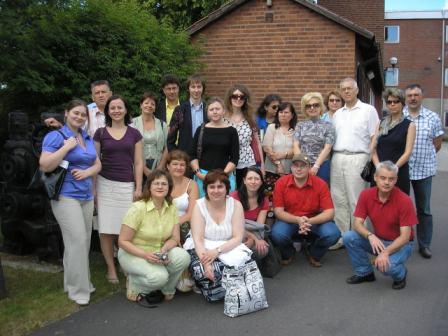
| | The study visit to Sweden was organized from 17 to 22 June 2007. In it took part municipal representatives from the three countries participating in the project. The Bulgarian delegation consisted of representatives of the Municipality and Municipal Council of Sofia, the Municipality and Municipal Council of Veliko Turnovo, the Municipality of Plovdiv and the Center of Women Studies and Policies. |
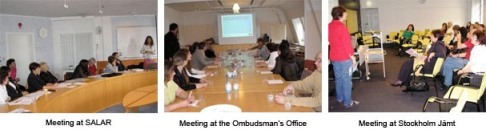
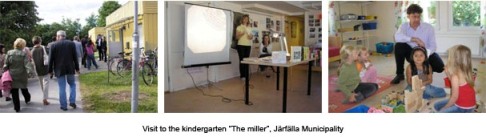
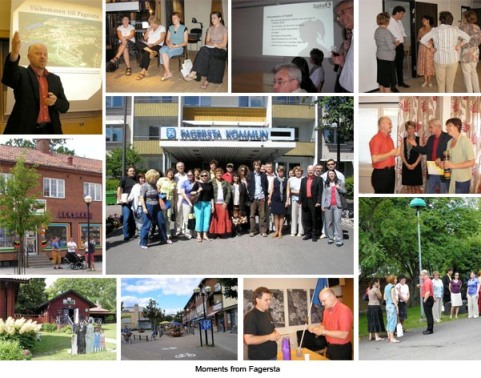
The multinational group had the opportunity to visit a number of Swedish institutions at central and local level - Equality Ombudsman's Office, Ministry of the Integration and Gender Equality, "Stockholm Jämt" (Regional State Office), Municipality of Fagersta, and had a meeting with an officer from the Swedish Police Trafficking Department. Associations and non-governmental organizations related to local governance and/or gender were also included in the agenda. The framework of Swedish gender equality legislation and policy and its strategic objectives, Swedish gender equality legislation, the institutional mechanism and relevant statistical data were part of the topics discussed during the meeting at the Equality Ombudsman's Office. The gender experts at the Swedish Association of Local Authorities and Regions presented different projects and initiatives at local level. During the meting at the regional administration in Stockholm the participants were introduced with a large scale initiative - municipal gender equality platform - uniting most of the municipalities in the region and focused on various aspects of gender inequalities revealed in spheres like education, healthcare, business etc. The participants visited the kindergarten "The miller", Järfälla Municipality where they had the opportunity to see how programs on gender equality are developed and implemented. This visit was one of the most valuable from the point of view of practical experience. 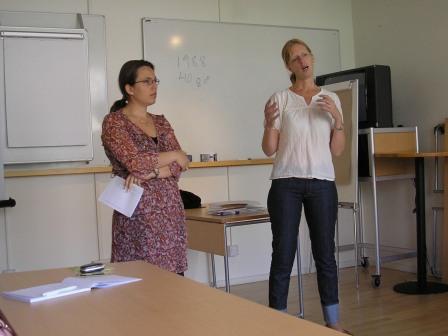 | Good practices for cooperation between the local NGOs and police/prosecution as well as the local authorities in handling cases of violence against women and the so called cases of "honor related violence" was shared during the meeting with the representatives of Kvinnoforum - one of the most famous and respected women's NGO in Sweden. | 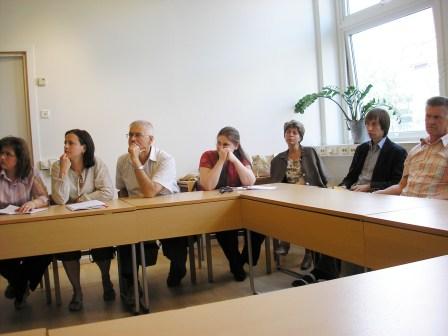 |
The Municipality of Fagersta demonstrated different gender equality measures implemented at local level in response of identified by the citizens needs and problems where the local governance could undertake actions - day care centers, schools, municipal facilities for sport and recreation, day care centers for old persons, encouragement of local women entrepreneurs. The municipal administration addresses the need of the community to combat acts of violence against women and supports together with another municipality a shelter for women victims of domestic violence managed by a local non-governmental organization and involving many volunteers, as well as a youth organization working with young girls and focused on raising their awareness for prevention of violence. | The last day the participants had a meeting in the Ministry of the Integration and Gender Equality. They were acquainted with the mechanisms for implementation of gender mainstreaming and gender budgeting at central administration level as well as with the coordination of the gender equality national institutional mechanism. |
The study visit was assessed by the participants as extremely useful from point of view of information received, experiences shared and contacts established between the participants and representatives of the visited NGOs, local and central administrations. | | The project entitled "Equality for Local Development: Gender Mainstreaming in Municipalities" (2006-2007) is financed and implemented within the Community Programme relating to the Community Framework Strategy in Gender Equality (2001-2005). Sole responsibility for the contents of this publication lies with the authors, the Commission is not responsible for any use that may be made of the information contained there. |
The project is supported in part by a grant from Foundation Open Society Institute (Zug).
|
|
Roundtables
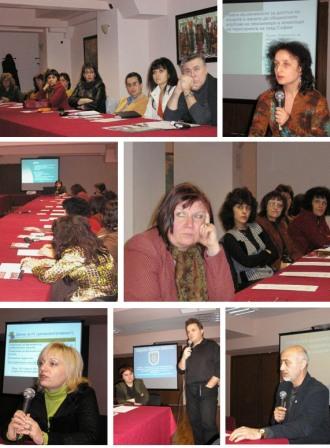
Three roundtable discussions were organized in order to disseminate the project results to other municipalities and stakeholders as well as to representatives of the central government bodies, responsible for gender equality policies. The roundtables aimed at promoting the innovative know-how experiences of the three municipalities, sensitizing the local community and fostering a debate on the need for gender equality policies in Bulgarian local authorities. The agenda of all roundtables included presentations of the aims of the project and the results of the 3R surveys conducted in the three municipalities. It also emphasized the necessity of gender work and provided examples of concrete actions that could be taken to ensure equal treatment and equal opportunities for men and women in local life. The participants in the roundtables were introduced with the project aims, the partners and the activities under it in an introductory presentation. The role of local governance was discussed in a separate presentation focusing on the Roadmap for equality between women and men (2006-2010), the Principle of Gender Equality in the new ESF Programmes (2007 - 2013), the European charter for equality of women and men in local life, drawn up and promoted by the Council of European Municipalities and Regions and its partners. This presentation addressed the wider audience of the roundtable making it familiar with the main values, priorities, measures and instruments of the EU and European local and regional governments regarding gender equality. It also provided a large number of EU and domestic good practices as well as concrete mechanisms and tools to guarantee gender equality at the local level. The main set of presentations discussed the results from the 3R micro-surveys conducted in the three municipalities in Bulgaria. They explored gender inequalities in diverse areas like sport and education, internship options in kindergartens, services to senior citizens and people with disabilities, public safety and improvement of tourist services and analysis of project proposals from gender perspective. The surveys were aimed at identifying if men and women, boys and girls have equal access and equal opportunities to use the municipal resources as well as what the existing or potential risks, obstacles and threats are. (Abstracts and Executive Summaries of the surveys). The participant in the project also shared their experience from the study visit to Sweden and especially their impressions from the meeting with the teachers and the children in the kindergarten "The Miller" and the visit to the Municipality of Fagersta. (More) All roundtables ended with discussions on the local dimensions of gender in/equality issues. The suggestions from the municipal servants, made in their Action Plans in the surveys, were accepted positively by the local stakeholders. The discussions were focused on the concrete dimensions of gender in/equality, the need of gender equality policies at the local level and what the municipalities can do to promote them. In each of the participating municipalities were addressed specific problems and solutions.
Roundtable in Plovdiv - 24 September 2007 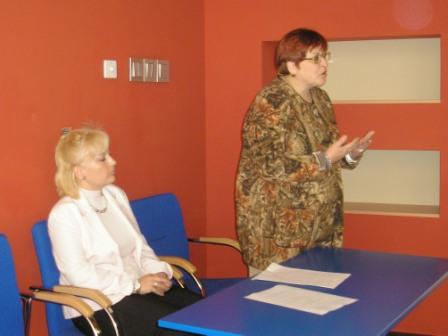 | The Roundtable in Plovdiv took place on 24 September 2007 and was attended by 45 representatives of municipal administrations, regional administrations, local non-governmental organizations and educational institutions. The discussion was focused on the 3R survey on the attitudes of male and female students to work with young children. The suggested measures in the Action Plan were accepted very warmly by the participants, who shared that the idea to encourage graduates to do part of their internships in kindergarten would be beneficial for the children and their parents, for the municipal kindergartens and the students. Thus the children would have the possibility to communicate more with young people - men and women. On the other hand, the possibilities of the children to communicate with male teachers will introduce the male role model in kindergartens, would contribute for breaking the established model as a result of which kindergartens provide children only with female behavior and role models. | 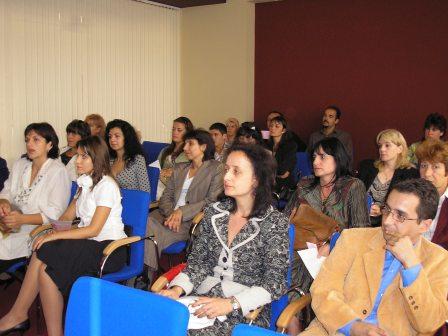 |
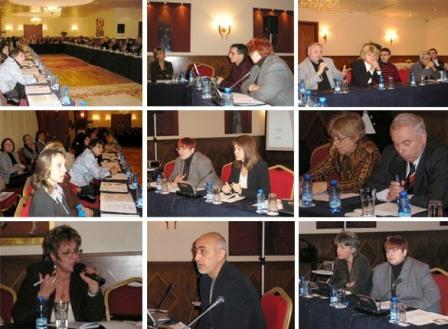
Roundtable in Sofia - 14 November 2007 The roundtable in Sofia was held on 14 November 2007 in the Radisson SAS Hotel, Sofia. It was attended by 63 participants - representatives of the municipal structures - administration and other service providing bodies, municipal councilors (newly elected), representatives of central administration, political parties, sports organizations and institutions, non-governmental organizations including the associations of municipalities, educational institutions - kindergartens, schools and universities, media. The discussion mainly emphasized problems faced by municipal schools in Sofia regarding the sports facilities and the gender dimension of the low participation of students into curricular and extra-curricular sports activities. The data from the survey conducted in one representative school clearly show that there is an alarming trend of decreasing the number of pupils both in curricular and extra-curricular sport activities with the age increase, especially for girls. As a result of the discussions was suggested that joint initiatives focused on gender equality should be launched in Sofia together with the CWSP. The suggestions included establishment of a informal women's club for renowned professional women from Sofia to discuss different issues related with the development of the city, development and popularization to the public of a plan on gender equality of the city, systematic training of municipal servants in gender equality issues, etc. . Roundtable in Veliko Turnovo - 20 December 2007 The roundtable in Veliko Turnovo was held on 20 December 2007 and served as the closing event of the project. It was attended by representatives of the municipal administration, municipal councilors, representatives of the regional administration, political parties, local non-governmental organizations including associations of municipalities, educational institutions - kindergartens, schools and universities, media. The roundtable followed the agenda of the previous events in Plovdiv and Sofia but the focus of its discussions was on the improvement of child care services by introducing a gender sensitive teaching approach. The opinions and the comments of the participating directors of kindergartens were extremely useful for the municipal servants engaged with this idea. The directors also showed their readiness to start working and interest in the topic. | | The project entitled "Equality for Local Development: Gender Mainstreaming in Municipalities" (2006-2007) is financed and implemented within the Community Programme relating to the Community Framework Strategy in Gender Equality (2001-2005). Sole responsibility for the contents of this publication lies with the authors, the Commission is not responsible for any use that may be made of the information contained there. |
The project is supported in part by a grant from Foundation Open Society Institute (Zug).
|
|
International Conference
The closing International Conference was organized on 19-20 November 2007 in Vilnius by the Lithuanian partners. It was attended by a group of 9 persons from Bulgaria - representatives of the participating municipalities and from the project partner CWSP. The purpose of the Conference was: To present explicitly the findings and results of the 3R research done by representatives from municipalities in Lithuania (Šiauliu, Širvintų and Ukmergės), Estonia (Kuresssaare and Narva) and Bulgaria (Sofia, Veliko Turnovo and Plovdiv). The research analysed the complexity of gender mainstreaming and gender budgeting in the daily work of municipalities To discuss the overall project results between the experts from project partners countries. To raise active discussions on developing a model for promoting gender mainstreaming to be implemented by local and regional administrations and public authorities on the national levels. To provide proper grounds for developing the possible follow-up activities as well as dissemination of experience in the field of gender equality.
The conference was attended by civil servants, decision makers, gender equality experts, NGO representatives from the participating countries in the project: Lithuania, Estonia, Bulgaria and Sweden. The support of the Program "East-East: Partnership Beyond Borders" of the Open Society Institute in Lithuania which fosters cross-border partnerships and collaboration, made possible that also participants from the Czech Republic, Georgia, Slovakia, Slovenia, Moldova, Romania and Ukraine could join the conference and learn from the project's experience. The International Conference gave the opportunity of the participants in the project to exchange views, share their achievements and, in addition, to learn about other successful international practices. The organized working groups focused on different aspects of gender equality and local governance and came out with interesting analyses and suggestions. Follow-up cooperation on the issues was discussed between participants from different countries and were made recommendations for decision makers in regard to promote gender equality in municipalities. The participants from Bulgaria presented all 3R surveys conducted in the country within the project. Presentations of the Bulgarian group (in English):
The project in Bulgaria: 1_project_info_Bulgaria_EN.pdf (1011.14 Kb)Equal access and equal opportunities for men and women to the municipal clubs for pensioners and people with disabilities in Sofia (Sofia)): 2_clubs_EN.pdf (48.13 Kb)Vandalism to monuments of culture - factor for restricting the access of women to public space (Veliko Turnovo): 3_graffiti.pdf (1.08 Mb)Attitudes of male and female students to internships in the kindergartens (Plovdiv): 4_kindergartens__EN.pdf (110.75 Kb)School sports facilities - suitable for girls and boys (Sofia): 5_sport_EN.pdf (256.02 Kb)Extra-curricular activities - need of rationalizing the free time of pupils to develop their interests and talents (Sofia): 6_programs_EN.pdf (167.69 Kb) | | The project entitled "Equality for Local Development: Gender Mainstreaming in Municipalities" (2006-2007) is financed and implemented within the Community Programme relating to the Community Framework Strategy in Gender Equality (2001-2005). Sole responsibility for the contents of this publication lies with the authors, the Commission is not responsible for any use that may be made of the information contained there. |
The project is supported in part by a grant from Foundation Open Society Institute (Zug).
|
|