| Project Activities |
|
 |
The project activities include
The e-mail group is an on-going activity that ensures constant exchange and dissemination of information as well as to facilitate the project management and decision making process including issues like: methodology for the overviews; description of the responsibilities of the participants; detailed plan and agendas for the site visits; list of people and organizations to be invited for the e-forum; content of the web pages; evaluation questionnaires.
-
Preparing three overviews of the different experience in training women entrepreneurs in the participating partner countries (Bulgaria, Slovakia, Turkey)
Another important activity was the preparation of three overviews on the existing practices in training women in entrepreneurship, prepared by the three partners for their countries. The overviews in English and each national language could be found on the websites. The Slovak overview is focused mainly on the mentoring practice, while the Bulgarian and Turkish analyze the existing experience in training women in entrepreneurship in the two countries and whether mentoring can be implemented there as training approach. The Bulgarian overview also incorporates a report on a small inquiry with women entrepreneurs, conducted within the project, which presents the opinion of the respondents on their attitude and willingness to participate in mentoring programs.
More about the overviews.
-
Launching an e-forum as a communication, motivation and learning tool in mentoring for women entrepreneurs
The forum is intended as a communication, motivation and learning tool in mentoring for women entrepreneurs. It is a media for exchange of experience and comments on the topic of female entrepreneurship and mentoring as a training approach. The gathered opinions are given by women from the three partner organisations, who answered the question: Do you think that business women are willing to share their experience and knowledge with other women? Why?
Women's opinions can be found at the page for the forum.
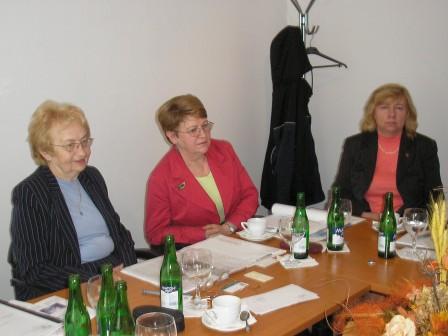
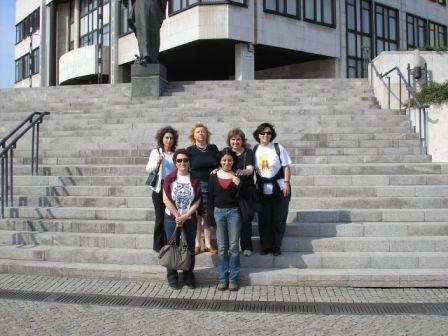
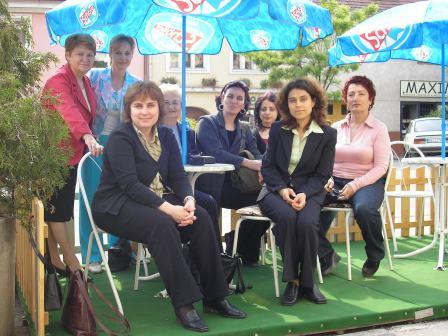
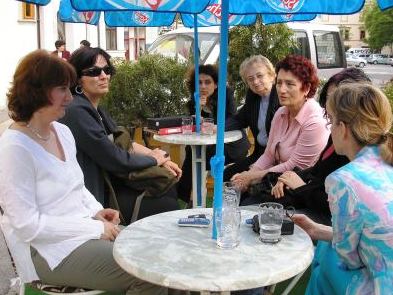
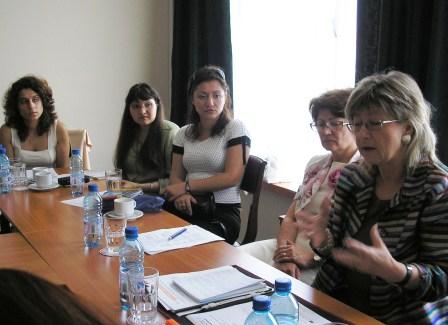
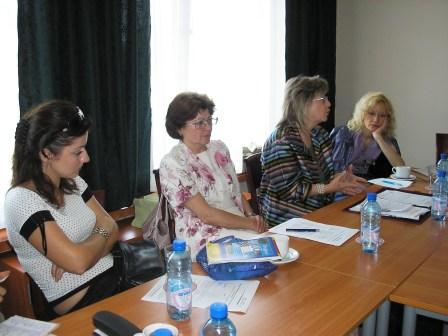
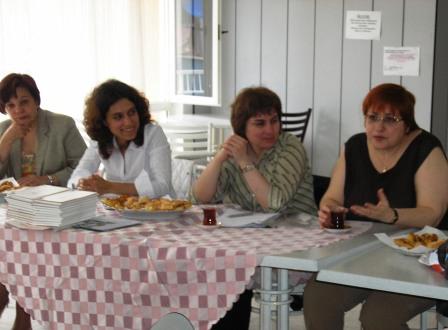
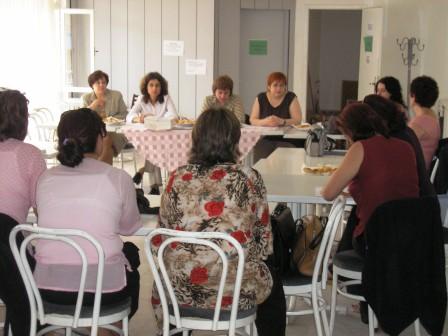
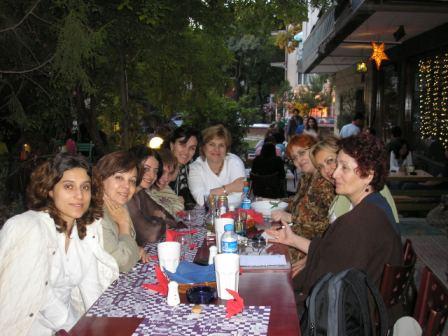
On the 13 May 2006 in Bratislava was held the project meeting of the three partners. The aim was to present to the partners from Turkey and Bulgaria the activities of the Top Center Podnikateliek – TCP (Top Center of Business Women – an association of business women in close relations with CWSP Association – Bratislava) and focus on its experience in mentoring for women entrepreneurs. During the visit the staff and learners met mentors and mentees of TCP from Bratislava and the nearby town of Pezanok, exchanged experience and discussed different approaches for motivating and training women as mentors and mentees as well as the pros and cons of mentoring as a training approach. The partners from Bulgaria and Turkey had the opportunity to see the achievements of these women and listen to their success stories.
More about the site visit in Bratislava.
The main project page in Bulgarian and English is hosted at the project manager’s website www.cwsp.bg. The partners from Slovakia and Turkey develop a separate page on their websites in the national language about the project and all three pages are linked. Apart from general information about the project and its activities the pages include the translations of the overviews with the good practices log and other resources in mentoring for women entrepreneurs. The page of CWSP, Bratislava for the project is hosted by the partner organization involved as trainer in the project – Top Center Podnikateliek (TCP).
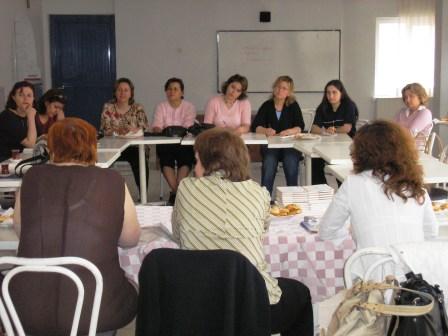
The purpose of the roundtables is to present the project results and the good experience of Slovakia to the local community and initiate a discussion on the specific topic of mentoring for women entrepreneurs as a way to encourage their participation in the economic life.
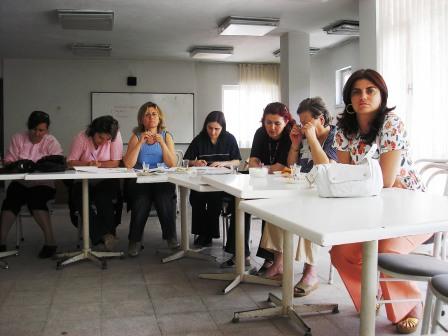
The Ankara Roundtable took place on the 10 June 2006 at the Community Center of the Contemporary Woman and Youth Foundation - involved in the project by the Turkish partners KA-DER as a learner organization. The event was attended by women entrepreneurs from disadvantaged groups. The Foundation works in one of the biggest and poorest districts of Ankara, called Mamak, providing different services to its target group, connected mainly with overcoming illiteracy, education and vocational training, support in job search and in business start up. The discussion was focused on the achievements and the obstacles faced by women entrepreneurs from disadvantaged groups, who were trained at the Community Center under a Matra financed project. The guests visited several businesses, established by the women trainees with the support of the Association established to the Contemporary Woman and Youth Foundation in order to assist the start up of women’s businesses. Already there are several small businesses established, mainly in the sector of services, which allow those women to overcome poverty, unemployment and social exclusion.
More about the Ankara Roundtable.
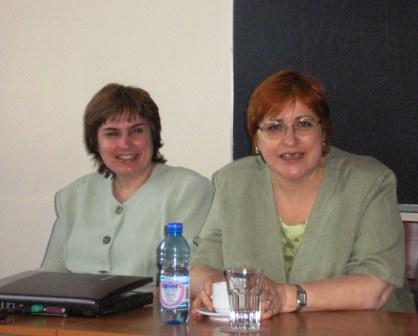
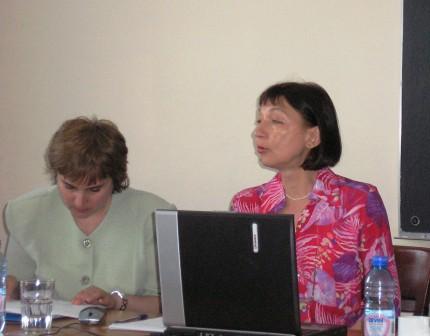
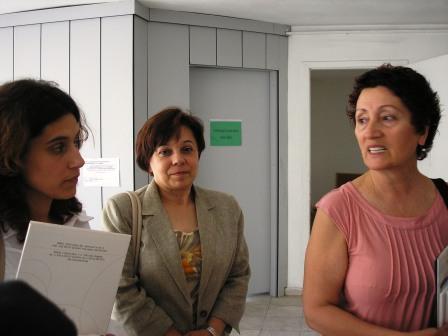
At the Sofia Roundtable held on 24 June 2006 the partners from Turkey and Slovakia and the participants from Bulgaria were presented with the results from an enquiry focused on women entrepreneurs. The respondents shared their opinions about the development of women’s entrepreneurship, the problems they face as well as the necessity of mentoring as a learning tool to increase their knowledge and skills in managing their businesses. The roundtable was attended by the learner organisation involved in the project - the Bulgarian Association of Regional Development Agencies (BARDA), representatives of different business women associations, other partner NGOs working in the field, researchers of the issue. The guests visited a shop for handicrafts products, established as an opportunity for women entrepreneurs to sell their products. The shop called Ten Senses is currently run by Integra Association, involved in training women in entrepreneurial skills, who had implemented a joint project on that with CWSP, Sofia (more). As a result were established several business women clubs with the most active one in Sofia, which embraced the idea of Fair Trade and started the shop in 2005.
More about the Sofia Roundtable.
These events were the closing activities of the project.

This page has been developed under the project Learning Partnerships against Social Exclusion: Mentoring for Women Entrepreneurs, financed by the Socrates/ Grundtvig 2 Program.
The contents of this document are the sole responsibility of the Center of Women’s Studies and Policies and can under no circumstances be regarded as reflecting the position of the European Commission or the Socrates National Agency.
|
|
Overviews on training experiences for women entrepreneurs
These overviews were developed within the joint project: Learning Partnerships against Social Exclusion: Mentoring for Women Entrepreneurs, implemented by the Center of Women’s Studies and Policies Foundation – Sofia, the Center of Women’s Studies and Policies Association – Bratislava and KADER Association for Supporting and Training Women Candidates – Ankara during the period of 1 August 2005 to 31 July 2006. The project is financed by the Socrates/ Grundtvig 2 Learning Partnerships Subprogram.
The project aims at exchanging knowledge and good practices about mentoring for women entrepreneurs as an alternative learning form, and promoting mentoring for women entrepreneurs as a way to overcome gender disparities, social exclusion and poverty by empowering women to participate more actively in national economy.
The overviews answers some key question in order to analyse the existing gender disparities and/or inequalities in the three countries concerning the economic activity of men and women amd the different experience in training women in entrepreneurship. The Slovak overview focuses mainly on the methodology of the mentoring practice, while the Bulgarian and Turkish ones analyse the existing experiences in the two countries and whether mentoring can be applied there as a training approach. The Bulgarian overview also include a report on a small inquiry conducted among women entrepreneurs within the scope of the project, which present the opinions of the respondents and their willingness to participate in mentoring training programmes.
Foreword:  foreword.pdf (25.16 Kb) foreword.pdf (25.16 Kb)
Bulgaria overview: overview_CWSP.pdf(385.27 Kb)
Report on the enquiry: report_inquiry_EN.pdf (70.33 Kb)
Turkey overview: overview_KADER.pdf(132.67 Kb)
Methodology of the mentoring practice in Slovakia: mentoring_TCP.pdf(12.56 Kb)
This page has been developed under the project Learning Partnerships against Social Exclusion: Mentoring for Women Entrepreneurs, financed by the Socrates/ Grundtvig 2 Program.
The contents of this document are the sole responsibility of the Center of Women’s Studies and Policies and can under no circumstances be regarded as reflecting the position of the European Commission or the Socrates National Agency.
|
|
E-forum
Here are presented some of the opinions of different women entrepreneurs who were reached through the project: trainees of the Contemporary Woman and Youth Foundation, Ankara, respondents to the enquiry conducted by the CWSP, Sofia and members of Top Center, Bratislava. They all answered the question:
They also share how such support could be provided. Find below their views and take a minute to join our e-forum to share your opinions.
We will be grateful if you send your answers by e-mail to: cwsp@cwsp.bg
THANK YOU FOR YOUR COOPERATION!
What do women from Slovakia say?
Women should help other women. To share my experience in mentoring with women from other countries was a big challenge for me. This process is very promising.
Business women can only become stronger and more confident in themselves if they share their business ideas and help each other without any boundaries.
Mentoring really helps. It is appropriate not only for women with already established businesses but also for female entrepreneurs who are starting up.
To help other women as a mentor gave me the opportunity to look at my own business from another angle; there is no bigger reward than the good relationships established during this process.”
What do women from Turkey say?
In my opinion, they have to support other women entrepreneurs but, unfortunately, they always think about themselves in a very selfish way, so instead of supporting they sometimes try to hinder. Yet, women must help each other. They must help each other in the name of the new generations and for happiness but they still act very selfishly. Women should be encouraged and supported with guidance.
Yes, they must support and help other women who want to have their own business. If they share their experiences this can be a great support for other women and by this many more women can have a place in business as entrepreneurs. Women must be supported in determining their aims, public relations, team work and legal procedure. They also must be encouraged.
Yes, they must help and support other women and give them opportunity to be benefited from their previous experiences. By this, they can empower and encourage women who try to establish their own business. Most beneficial for women will be to provide them with consultancy in accessing to credits, work planning and market researching.
Women must help and support other women because they really know what are the most important needs of a women who has recently established her own business. Women must train and guide women. Most women do not know what to do in the process of establishing a business, so the experience of another woman is very helpful.
Women do not have to, but I think they should support and help other women. It's very hard for a woman to establish her own business in Turkey. The state must support them by reducing the taxes for a period of time and by microcredits.
I think women must help and support other women. In- my opinion, it must be an obligation for women who get support from women's NGOs in order to establish their business to also help other women in entrepreneurship. They must be supported with technical help, vocational training, guidance in legal procedures and marketing.
Of course, women must support each other instead of being rivals because it is women who are always in harder conditions. They must be supported with microcredits given by state agencies, banks and foundations. These credits must be enough for establishing a new business and also they must be without interest. The state must implement social projects for women. Also one of the big problems is the husbands who are mostly against such kind of activities of women. Husbands must be educated.
Yes, they must help each other. The reason for me to take part in this project was its aim: women for women. They must be supported by microcredits. They need consultancy in marketing. They need training for awareness raising. It always makes me happy to see women in better situations. I hope some day all women will have their economic independence.
Of course, women must help women. In my opinion, all women are very skilful but they need somebody to help and encourage them. The best helper of a woman is another woman. It is a problem to be women in Turkey. Women do not have their own resources. Although they are only for small amounts, microcredits are important.
What do women from Bulgaria say?
Rather no. the main obstacles are: lack of free time – women entrepreneurs have to balance between family responsibilities and business obligations; lack of appropriate programs and funds to cover the time spent by the women mentors to support other people; the threat of creating potential competition and the lack of business culture on the part of the mentees and their understanding that somebody else is obliged to teach then.
Definitely yes. More women should have their own business. That’s how competition is developed. The most useful form of training for women is individual coaching, especially in the initial stage of their business.
Of course women should help other women and share experience and knowledge. Women have bigger potential and such support will help them develop their talents. On the job training is probably the most appropriate form for that.
Definitely yes. Women are generous, open and communicative. Moreover, when they share, they also learn something useful for them. Besides, they are more talkative than men and like to exchange views. I believe that training through Internet gives many opportunities for that.
Certainly. There is nothing more natural than sharing with relatives and friends your experience, your doubts and your successes. And yet, the other person should be well-meaning.
I think that women are not much willing to share their experience with other women because they are afraid of competition. I personally would like to become a mentor and the most efficient for me is the personal contact and individual coaching.
Most women are willing to share their experience with other women, at least of women’s solidarity, and also because women are better managers. Any approaches could be used for such training, depending on the preferences of the different people – therefore, training through Internet as well as individual coaching and on the job training would be useful if well organized.
This page has been developed under the project Learning Partnerships against Social Exclusion: Mentoring for Women Entrepreneurs, financed by the Socrates/ Grundtvig 2 Program.
The contents of this document are the sole responsibility of the Center of Women’s Studies and Policies and can under no circumstances be regarded as reflecting the position of the European Commission or the Socrates National Agency.
|
|
Site visit to Top Center in Bratislava
On the 13 May 2006 in Bratsilava was held the site visit for exchange of experience and project meeting and of the three partners. The aim was to present to the partners from Turkey and Bulgaria the activities of the Top Center Podnikateliek – TCP (Top Center of Business Women – an association of business women in close relations with CWSP Association – Bratislava) and focus on its experience in mentoring for women entrepreneurs. During the visit the staff and learners met mentors and mentees of TCP, staff and heads of the training programs.
In the meeting took part: Anna Angelova, representative of the Slovak partner CWSP Association and Elvira Chadimova, President of Top Center Podnikateliek – TCP (Top Center of Business Women Association), Eva Shishkova, Mentoring Project Coordinator, Vice President of TCP, Dana Martinkova, TCP member; Ceren Isat from KA-DER and Zuhal Arnaz-Tataroglu and Gul Erdost from Contemporary Youth and Women Foundation, Ankara; Magdanela Delinesheva from CWSP, Sofia and Dimitrina Todorova from BARDA (Bulgarian Association of Regional Development Agencies).
TCP organized a meeting with mentors and mentees from the organization, who presented their experience in mentoring and acted as trainers in the framework of this project. They also presented their projects on mentoring and motivation workshops as well as other major activities, implemented together with national organizations and governmental institutions like the Ministry of Economy and the SME Agency, and other foreign partners. TCP provides a range of services for its members like: organization of different events (conferences, workshops, contests, parties etc.); publishing a regular information bulletin, providing consulting services and different types of training for its members. In September 2005 the TCP organized the First Day of Female Entrepreneur under the auspices of the Slovak First Lady.
Both partners from Bulgaria and Turkey invited representatives from their partner organizations to take part in this project as learners, based on their experience in activities, related to women entrepreneurs and their willingness to implement mentoring programs in their future training courses.
The Turkish learners from the Contemporary Youth and Women Foundation, Ankara, work mainly with marginalized and disadvantaged women from the migrant families in the slums of Ankara. The organization is currently implementing a project focused on female entrepreneurship as a means for fighting poverty and social exclusion, as well as another one focused on home based workers.
One of the good practices mentioned by the CWSP, Sofia is the partnership with BARDA, a network of over 20 regional development agencies in Bulgaria, which has a special interest on increasing the role of women in business and has been cooperating with the CWSP on a number of projects and initiatives. This project and learning exchange is an opportunity for BARDA members to enhance their knowledge in mentoring as a training approach for women entrepreneurs and seek for opportunities to develop and apply such programs throughout their network.
The Slovak trainees presented their initiative Mentoring for Women Entrepreneurs (5 / 2002 – 12 / 2003), which was one of the first significant projects, that made TCP visible in the society. It was started by Ms. Eva Shishkova, who invested financial and in-kind personal resources. Soon it involved 80-100people. The project was implemented in partnership with a business women organization from Germany and was based on their experience. TCP learned from its experience that mentoring cannot be regarded as a mass phenomenon or a practice involving many people. It assists the exchange of information rather than stressing on the competition aspect. The leading principle is “My experience is your experience”.
The author of the methodology of the Slovak partner is Ms. Chadimova, PhD, initiator and President of TCP, respected and one of the most successful business people in Slovakia. The methodology focuses on the profile of the prospective mentor and mentee, the limits of the activities of the mentor and many practical issues regarding the relationship that should be established by the mentor and mentee as well as the risks and possible problems that sometimes occur. The Slovak trainers also explained in detail how they use the media to advertise and encourage women to join their program and how they selected participants in the program.
The participants had the opportunities to visit Pezinok, a small town situated close to Bratislava and learn more about the specific features of mentoring. The meetings gave the learners from Bulgaria and Turkey first-hand impressions of how the relations between mentors and mentees are established and what makes them successful. They were all inspired by the personal achievements of all these women as well as their understanding of help, support and encouragement they give to other women. All partners agreed that from this meeting and the site visit they learned much more about mentoring as an approach, process and practically saw its results and benefits. The partners from Bulgaria and Turkey expressed their willingness and interest in starting such programs in their countries as well as for future joint activities in the field.
This page has been developed under the project Learning Partnerships against Social Exclusion: Mentoring for Women Entrepreneurs, financed by the Socrates/ Grundtvig 2 Program.
The contents of this document are the sole responsibility of the Center of Women’s Studies and Policies and can under no circumstances be regarded as reflecting the position of the European Commission or the Socrates National Agency.
|
|
Roundtable in Sofia
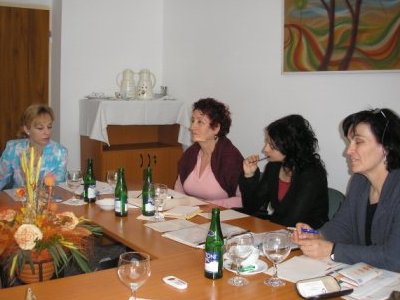
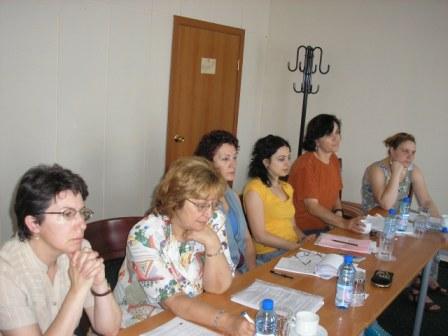
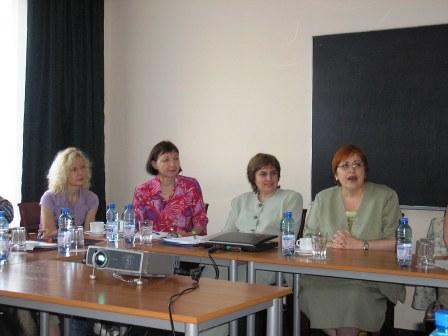
On 24 June 2006 in Sofia was held the roundtable presenting the project in Bulgaria. The purpose of the roundtables was also is to share the project results and the good experience of the partners with the local community and initiate a discussion on the specific topic of mentoring for women entrepreneurs as a possible form for self-employment of women in order to increase their number and improve the quality of their participation in the economic life through development of mentoring training programs and materials.
In the roundtable took part the Slovak partner CWSP Association – Iskra Pehlivanova (Project Coordinator, Bratislava), Bojena Volkova and Zuzana Karlikova (Top Center, Bratislava); the Turkish partners – Ceren Isat (Project Coordinator, KA-DER), Zuhal Arnaz-Tataroglu and Gul Erdost, (Contemporary Youth and Women Foundation, Ankara) and from Bulgaria the representatives of the leading organization CWSP, Sofia – Magdanela Delinesheva (Project Coordinator), Tatyana Kmetova, Roza Dimova, Natalia Piskova, Aleksandra Vlaikovich (Intern at CWSP, Master's Program in Democracy and Human Rights in South East Europe in Sarajevo), as well as Mariana Draganova, Sociologist, Bulgarian Academy of Sciences, Dimitrina Todorova and Milena Dacheva, BARDA (Bulgarian Association of Regional Development Agencies), Mariana Pecheyan, President, Club of Women Entrepreneurs and Managers; Irina Yordanova, Director EU Projects, Confederation of Employers and Industrialists in Bulgaria; Elena Krastenova, Foundation for Entrepreneurship Development.
The programme for the visit included a Roundtable (Serdika Hotel) and a visit to the shop “Ten Senses”.
The Roundtable was moderated by Tatyana Kmetova, Executive Director of CWSP. She presented the participants from Bulgaria. The roundtable gathered women from different organizations who work for encouraging women’s entrepreneurship and focused on different target groups – from school girls to disadvantaged women. Ms. Ceren Isat and Ms. Bojena Volkova afterwards presented the guests from Turkey and Slovakia.
Magdanela Delinesheva presented the activities of the CWSP in particular the Program of CWSP on Women in the Economic Development is mainly focused on conducting researches, surveys and analyses (Social and economic infrastructure and guarantees for equal treatment of women in Bulgaria, 2004; Women and men in Bulgarian Pension System, 2004; Bulgarian employers and women at work, 2004; Gender analysis of a company, 2005) as well as providing training to women in entrepreneurial skills (implemented with Integra-BDS Association in 2004 in 4 big and 4 small municipalities, which also included counseling for business start up and management during the period of growth by developing specific business skills, conducting analysis of the needs for additional training as well as the creation of a network of women’s business clubs for support).
Special emphasis of the presentation was put on the project Learning partnerships against social exclusion: mentoring for women entrepreneurs (financed by the Socrates/ Grundtvig 2 Learning Partnerships Subprogram) in the framework of which was organized this roundtable. The project partners – CWSP, Sofia, Center of Women’s Studies and Policies Association, Bratislava and KADER Association for Supporting and Training Women Candidates, Ankara, invited as learners from this exchange of experience three main organizations from the three countries: Top Center Association, Bratislava; Contemporary Youth and Women Foundation, Ankara and the Bulgarian Association of Regional Development Agencies
Ms. Mariana Draganova, Ph.D., from the Institute of Sociology of the Bulgarian Academy of Sciences, presented the Report on the results from the conducted inquiry among women entrepreneurs. The inquiry was carried out using a questionnaire as an instrument for collecting the information, prepared according to the suggestions and with the approval of the CWSP Sofia. On the whole 45 women entrepreneurs filled it in, therefore the collected data and the analysis is valid only for the surveyed aggregation. The purpose of the inquiry was to receive more detailed information about the problems that women entrepreneurs face in their work, about their opinion regarding opportunities for partnership and development of mentoring training programs. The inquiry checked what the level of awareness of women business owners regarding mentoring as an approach is as well as their attitude to it as a business training tool. Special emphasis was put on their opinions regarding women’s training needs in entrepreneurial skills and the most appropriate forms of training according to them, including their attitude towards mentoring as an approach. In that respect they resonded whether they consider that women business owners are willing to partner and share their experience and knowledge to other women as well as other questions regarding different problems of women entrepreneurs.(More:results_enquiry.pdf (95.09 Kb))
On the basis of this inquiry a few very important conclusions were drawn: (i) women entrepreneurs are open to gain new experience, knowledge and skills through continuous training; (ii) mentoring as an alternative form of training for women in business and its advantages was not completely recognized among the women entrepreneurs; (iii) women entrepreneurs are willing and feel prepared to be trained as mentors through new training forms for women in business especially through Internet and on the job training or being mentees using e-discussion forums, individual coaching etc.; (iv) the respondents do not support the view that gender discrimination in the field of business exists, even though they indicate the family obligations and childcare as the main reasons for the difficulties and the biggest burden in their work; (v) the business profile of the surveyed women is still in the conventional branches as services and trade.
Then Ms. Bojena Volkova from the Top Center, Bratislava shared her personal experience in starting up her own business after the changes in former Czechoslovakia in 1989. She managed to use her professional expertise as a flight attendant, a person who spoke foreign languages and had studied tourism and protocol and established her tourist agency with the support of her family. Afterwards, it was a natural response to the demand of the market that her company started to organize events like congresses, exhibitions, international fairs. For this purpose, she needed qualified personnel and started to provide training to women in these skills initially, which afterwards in entrepreneurship. She has been with the TCP since its establishment and is of the mentors with a lot of experience in training.
The other representative of the Slovak partner – Ms. Zuzana Karlikova shared her experience as a mentor and one of the people who initiated the mentoring programme of the TCP, Bratislava. Ms. Karlikova’s business is in the sphere of tourism – she is a hotel owner. She explained what the procedure for organizing the mentoring process in TCP is. First, she focused on the importance of media advertisements – in order to find the most appropriate candidates for mentors and mentees on the one hand, and on the other, to widely promote the idea to the general public. After gathering the candidates, the prospective mentors choose their future mentees and meet each other to introduce themselves and share their expectations. Afterwards the mentor and mentee(s) – because one mentor may have more than one mentee – specify their schedule for meetings on a regular basis. During these meetings very concrete questions are discussed, i.e. mentoring is achieved through discussing problems. The mentor answers questions and gives advice but the final decision is taken by the mentee. In fact, this process is not useful only for the mentee.
Ms. Karlikova was asked to share her personal involvement as a mentor. She had a mentee (also in the same sphere of business, which is, however, not so spread as a practice). The mentee started building a hotel in another town and during the year of mentorship they regularly had conversations on the phone. According to Ms. Karlikova, this experience was very useful for her as a mentor as well. She herself received better view of her own business. She felt rewarded with the successful results of her mentee and the good relationship established between them. The mentor finds new possibilities, too. In conclusion, Ms. Karlikova considers that the mentoring programme is very useful both for women, who are starting up their businesses and for already successful women entrepreneurs and especially to extend and develop such relationships including at the international level.
Ceren Isat presented the Turkish partner – the Association for Supporting and Training Women Candidates, KA-DER, Ankara. She emphasised on the good partnership established with the Contemporary Woman and Youth Foundation and the new opportunities for enhancing the joint activities on the basis of the experience of the project.
Ms. Zuhal Arnaz-Tataroglu presented briefly the activities of the Contemporary Woman and Youth Foundation which operates as a community center in the district of Mamak, which is one of the largest and poorest districts in Ankara with unemployment rates of almost 100 per cent for women. The most important activities for the organization have always been empowering women starting from basic literacy courses. Ms. Tatargoglu presented one of the most important projects of their organization called “Women for Women” (January 2004 – October 2006), financed by the Matra Programme of the Dutch Ministry of Foreign Affairs. It is about establishing a Women Employment Centre in the poor suburb of Mamak in Ankara. More about the project and the women trained though it.
The participants asked Ms. Arnaz-Tataroglu if there were already women who after the trainings started up their own businesses. She explained that by that time 20 women had already started up their businesses and opened up: 3 restaurants, serving traditional food; a workshop for extra-large clothes; a workshop for knitted goods; a mosaic workshop; a real-estate agency; a day-care center; a laundry; a waffle factory.
Ms. Mariana Pecheyan, President of the Club of Women Entrepreneurs and Managers and Business Lady of the Year Award 2000 is also one of the founders and the driving force of the Club of Women Entrepreneurs and Managers. It was established 3 years ago and now more than 60 women take part regularly in its activities. She expressed the willingness of the Club to extend its relation with similar organizations abroad and was very interested in the opportunity to establish contact with the Slovak partners from PTC. (More)
Ms. Dimitrina Todorova, Executive Director of BARDA, discussed the partnership with CWSP and the importance of the project Learning Partnerships against Social Exclusion: Mentoring for Women Entrepreneurs for BARDA with regard to its future using of mentoring as a training approach for women entrepreneurs throughout their network. She focused on the necessity of introducing a mentoring programme for women entrepreneurs using the Slovak partners’ models and confirmed that BARDA will be involved through its regional agencies in a follow-up of this project for implementing this programme.
Before closing the discussion, the project coordinator from Bratislava – Ms. Iskra Pehlivanova once again focused on the importance of this type of good practice exchange for all partner organizations, as well as for the invited learner organizations to join the learning partnership. Ms. Karlikova suggested that with the use of new technologies and forms of training online, mentoring can go beyond borders and achieve successful results. The Slovak partners from TCP are ready to offer mentoring to women entrepreneurs from Bulgaria and Turkey. The partners agreed to look for new opportunities to continue this partnership.
After the roundtable, the guests were invited to visit the shop “Ten Senses”, where the group was joined by Ms. Susan Chakar from the Turkish Cultural Center and Ms. Daria Ivanova, volunteer to the CWSP. The shop “Ten Sense” was established by Integra-Bulgaria in collaboration with Counterpart–Bulgaria. Both organizations have good partnership with the CWSP and have implemented joint projects or initiatives. The guests were welcomed by Integra’s staff, responsible for the programme – Ms. Dessislava Chalamova and Mr. Petar Petrov, who spoke about the concept of Fair Trade, how it was introduced in Bulgaria and the Brand “Ten Senses”.
All meetings and visits were valued high by the participants because they had opportunity to discuss and exchange their experience and think about new opportunities to support and enhance women’s participation in business. The different experiences and expertise of the participants was an asset to project by giving different angles and finding innovative ways to establish new partnership and further develop the existing ones.
This page has been developed under the project Learning Partnerships against Social Exclusion: Mentoring for Women Entrepreneurs, financed by the Socrates/ Grundtvig 2 Program.
The contents of this document are the sole responsibility of the Center of Women’s Studies and Policies and can under no circumstances be regarded as reflecting the position of the European Commission or the Socrates National Agency.
|
|
Roundtable in Ankara
On the 10 June 2006 in Ankara was held the roundtable presenting the project. The purpose of the roundtables was also is to share the project results and the good experience of the partners with the local community and learn from their experience. It also aimed at discussing if mentoring could be used as a training approach.
In the roundtable took part the Turkish partners – Ceren Isat (Project Coordinator, KA-DER), Zuhal Arnaz-Tataroglu and Gul Erdost, (Contemporary Youth and Women Foundation, Ankara) and from Bulgaria the representatives of the leading organization CWSP, Sofia – Magdanela Delinesheva (Project Coordinator), Tatyana Kmetova, Dimitrina Todorova, Bulgarian Association of Regional Development Agencies (BARDA), Darina Draganova, Regional Economic Development Agency (REDA), Stara Zagora.
The roundtable in Ankara was attended by a group of women entrepreneurs supported by the Contemporary Youth and Women Foundation (CYWF), Ankara, which provides training for them and is involved in the project as a learner organization: Figen Sayar, Zenrem Sayar, Ozlem Galit, Hatice Evren, Ilknur Usturol, Zarife Denirei.
The programme for the visit was as follows included a Roundtable at the Contemporary Woman and Youth Foundation (Çaðdas Kadýn ve Gençlik Vakfý), and visits to the Stroopwafel Factory, to the “From Women’s Hands” Restaurant, and to a café and antique shop in the old town, all established and run by women, trainees of the Contemporary Woman and Youth Foundation.
Ms. Zuhal Arnaz-Tataroglu opened the meeting and welcomed the participants – the project partners from Bulgaria and the women from Turkey. She presented the agenda and the Turkish participants, all of whom had already passed a set of trainings provided by the Contemporary Woman and Youth Foundation and after the training in entrepreneurial skills started their own business or are preparing to do so.
Ms. Zuhal Arnaz-Tataroglu presented briefly the activities of the Contemporary Woman and Youth Foundation which operates as a Community Centre in the district of Mamak – one of the largest and poorest suburbs in Ankara with over 600 000 inhabitants. 40 000 women and 10 000 men in Mamak are fully illiterate. Unemployment rates are high, almost 100 per cent for women.
Therefore, one of the most important activities for the organization had always been empowering women starting from basic literacy courses. Ms. Tatargoglu presented one of the most important projects of their organization called “Women for Women” (January 2004 – October 2006), financed by the Matra Programme of the Dutch Ministry of Foreign Affairs. It is about establishing a Women Employment Centre in the poor suburb of Mamak in Ankara.
The overall objective of the project was to help Turkish women integrate in economic life. The target group of the project is 500 women from Mamak, who had been supported to gain a greater social and economic independence and contribute to the efforts of the Turkish Employment office and the Ministry of National Education by:
- Training and self-confidence building through gender empowerment
- Job counselling and business creation
- Media exposure and public awareness
As a result of the project were trained 500 women, who would train another 150 women per year. Most of the women in the project received technical training and then the job counsellors of the project found them a job. It was achieved on the basis of an enquiry, conducted by the Foundation among the business owners (mainly from the service sector) in the area. The inquiry identified the needs of the employers and what they offer and the employees had the opportunity to choose from different options and 147 women could find jobs. A commonly identified problem was that not all employers pay social securities. Some of the trained women refused to start a job, because they considered that the salary is too low and does not cover their daily expenses for food and transport as well as the high price of baby-sitting – in the area there are only three free day-care centres, which are not enough for the residents.
However, the project also aimed at helping these women to set up their own business. Therefore, the CYWF registered its Association through which it has helped those women who would like to start up their own business. About 20 women have already done so. The idea is that these women should be able to employ five women each within two years.
As a result of the training and the entrepreneurial spirit of these women were established several women-owned businesses, like: 3 restaurants, serving traditional food; a workshop for extra-large clothes; a workshop for knitted goods; a mosaic workshop; a real-estate agency; a day-care centre; a laundry; a waffle factory. More about the stories of these women.
Though the measurable effects are small against women’s problems in Turkey and the project’s impact takes time to develop, the CYWF considers that small but successful examples can lead to lasting societal changes on a much larger scale. More about the project activities and the results can be found at: http://www.w4w.nl/
Ms. Tatyana Kmetova talked about the Center of Women’s Studies and Policies, Sofia and its activities, focused mainly on research and training as well as other joint projects with Turkish organizations. She presented in more detailed the surveys and researches of the CWSP on women’s role in economy and the conducted in 2004 trainings in entrepreneurial skills for women at risk in partnership with Integra Association.
The participants in the roundtables had a number of questions to the guests from Bulgaria about the situation of women in Bulgaria, especially on the labour market and women in business. They discussed the different forms of training provided to women, as well as the business sectors in which they usually operate. The participants also gave their opinions regarding the importance of mentoring for women entrepreneurs.
Ms. Darina Draganova from the Regional Economic Development Agency, Stara Zagora shared their experience with establishing and supporting a social enterprise HandKnitCrafts.com – a web based enterprise, selling traditional handmade knitted products. The enterprise was set up by a group of handicapped women, who had worked before for a state-owned clothing company as seamstresses. They were laid off from work in 1991 with the explanation that as invalids they would be taken care of by the State. However, they wanted to and felt able to work and find their place in society. The enterprise was established in 2004 with the help of the Regional Economic Development Agency of Stara Zagora after passing a short training in organization and developing own business and developing the idea for the activities of the enterprise – hand knitting. Today, their unique products have already created their clients and sell well through the internet.
More about the history of the enterprise and its current work: http://www.handknitcrafts.com
Ms. Dimitrina Todorova, Executive Director of BARDA, added to this successful practice by pointing out several more examples for social enterprises – for instance, the laundry in Pleven, run and operated by an organization, providing services and shelter to women, victims of domestic violence. The local organization, member of BARDA, supports the enterprise by consultancy services. Ms. Todorova also talked about the more important projects of BARDA, related to gender issues, like the recently finished an international project called STERE/O under the EQUAL Programme, of 8 organizations from 6 EU and candidate countries. The aim of the project was to identify gender stereotypes underlying the division of labour, access to career advice and vocational counselling practices by comparing situations in member and candidate countries. The findings from the statistical evaluation and the field research in the six partner countries made it possible to formalize conclusions and bring out analysed and gender disaggregated data, to be used by trainers and all persons willing to integrate the gender dimension into their practices. She also discussed the partnership with CWSP and the importance of the project on mentoring for women entrepreneurs for BARDA, with regard to the further implementation of this approach throughout their network.
Before closing the discussion, the project coordinators from Turkey and Bulgaria –Ms. Ceren Isat from KA-DER, Ankara, and Ms. Magdanela Delinesheva from the CWSP, Sofia, once again focused on the purpose of the project and the importance of this information and good practice exchange for both partner organizations, as well as for the invited learner organizations to join the learning partnership.
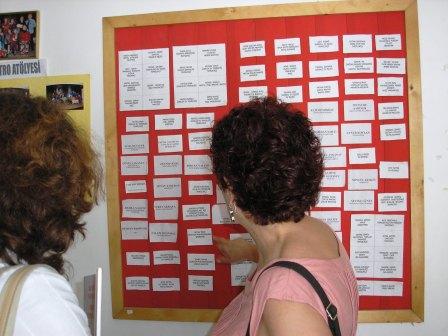
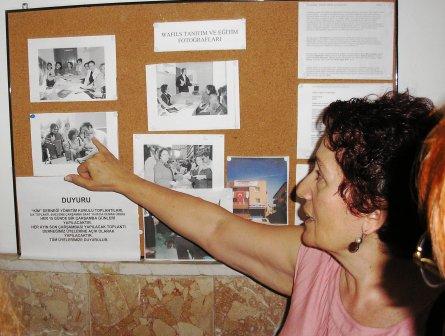
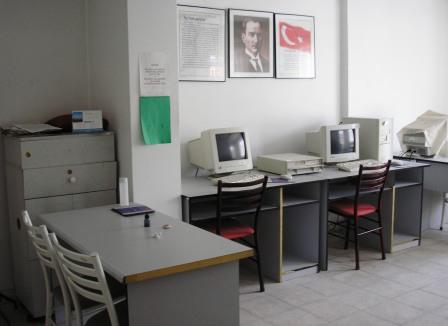
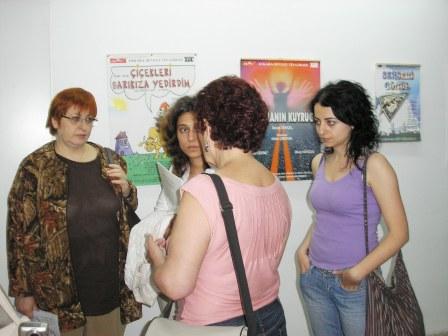
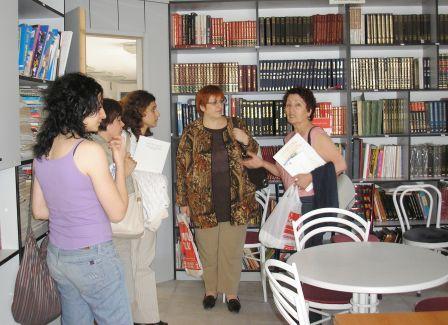
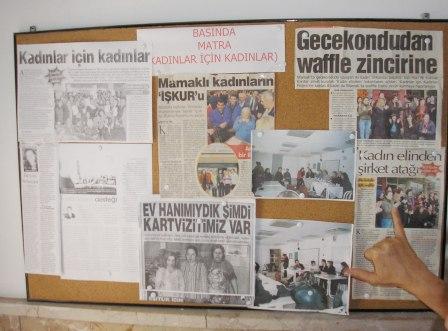
After the roundtable, the guests were invited to see the facilities of the Community Centre of Mamak, run by the Contemporary Youth and Women Foundation (CYWF), Ankara. The Centre has a library, where children from the area come and prepare their homework with the help of the social workers from the Centre, computer room, a big hall used for trainings, its own theatre hall and special rooms used as children day-care premises, when the mothers are attending classes in the Centre. Impressive boards with the names of the women-trainees of the Centre indicating their present jobs clearly speak for the achievements of the Foundation’s team as well as the informative materials and newspaper scrap boards.
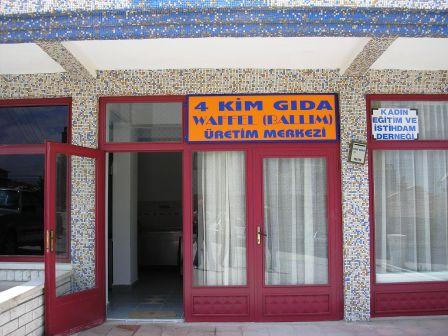
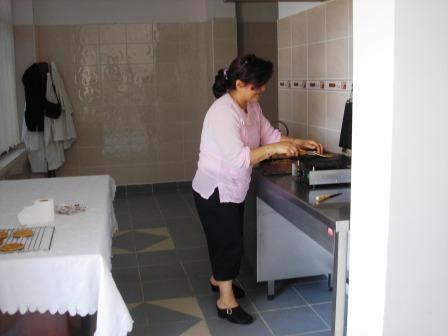
After that the guest visited the first waffle factory in Ankara, established as the first venture of the Matra project “Women for Women: The Stroopwafel Factory in Ankara. The Stroopwafel Factory is the trade name of Ballim. The company is owned and run solely by women. The owners of the factory are five women, that passed the trainings under the project, and currently they employ five more women. The Stroopwafel Factory is a social enterprise with real profit sharing and human resource development.
More about the factory and the product can be found at: http://www.w4w.nl/ballim/
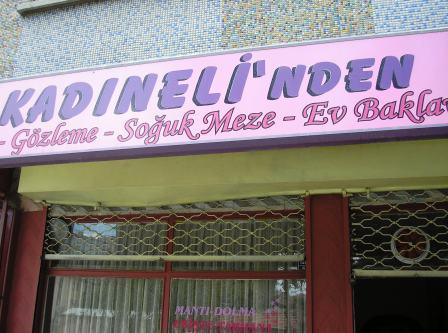
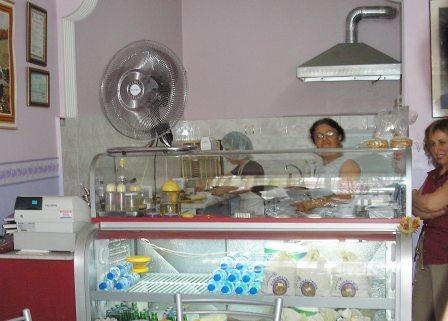
Then the participants had lunch in a restaurant, which was also set up as a result of the trainings the women-owners received through the a.m. project. Three women joined their efforts and started up this business, and already managed to find, though not easily, their place in the area they live. Another business, visited by the guests, was a small café above an antique shop in the old town. The café is run by a woman-trainee of the Foundation, who partners with her friend, who is the owner of the antique shop, and started their business in the tourist area by offering the opportunity for the visitors to taste traditional desserts and drinks and choose from the variety of antiques and souvenirs.
All meetings and visits gave the participants the opportunity to see and learn from the experience of the Contemporary Women Youth and Women Foundation, Ankara to encourage women’s entrepreneurship in order to fight poverty and social exclusion. The project partners and the learners agreed that mentoring programs should be introduced and used as much as possible in their work with women entrepreneurs.
This page has been developed under the project Learning Partnerships against Social Exclusion: Mentoring for Women Entrepreneurs, financed by the Socrates/ Grundtvig 2 Program.
The contents of this document are the sole responsibility of the Center of Women’s Studies and Policies and can under no circumstances be regarded as reflecting the position of the European Commission or the Socrates National Agency.
|
|